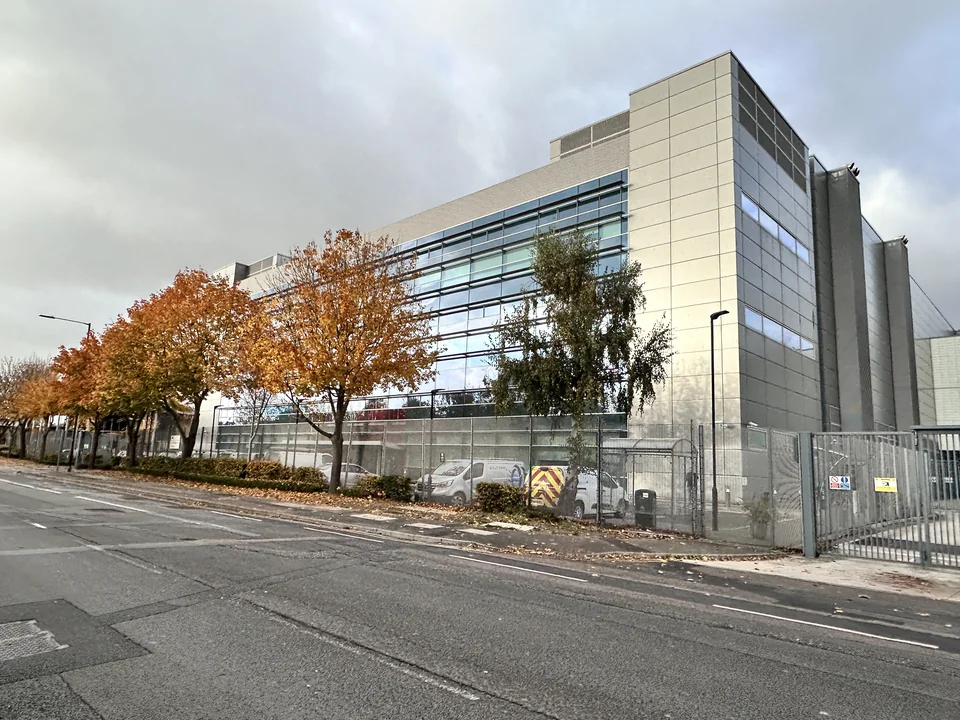
Slough Trading Estate has a reputation for making things. It is tempting to think that somebody got the idea rather early. Long before the factories arrived, nineteen bronze axeheads ended up underground in what is now the estate’s western end. A prehistoric stockroom? Perhaps. A Bronze Age factory? Let us keep the planning application on hold.
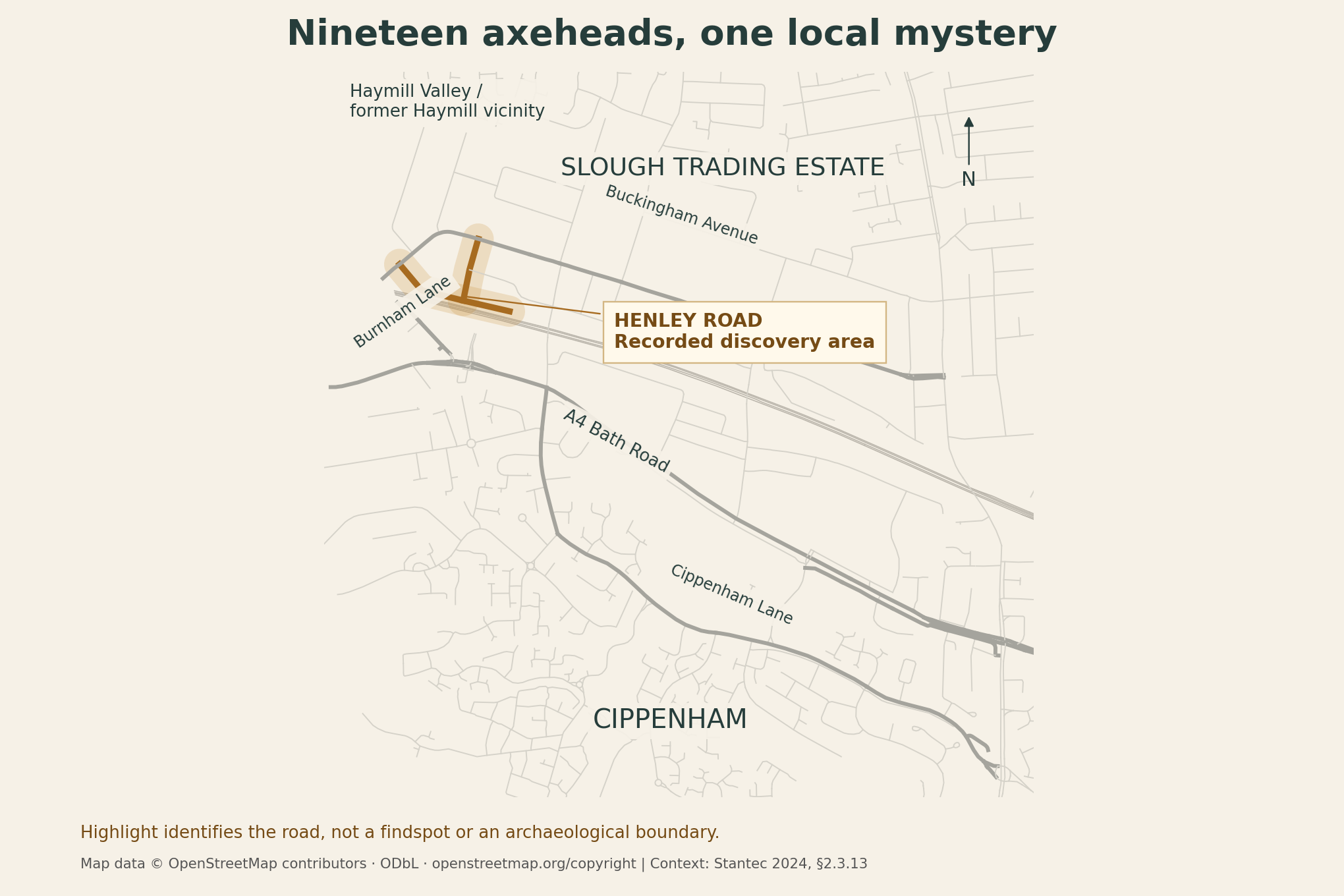
The discovery is recorded in an archaeological report prepared for the Trading Estate in June 2024. Drawing on the Historic Environment Record, it places a hoard of nineteen palstaves on Henley Road, found two feet below the surface, roughly 60 centimetres. The report cites record MSL7943.[1] An Ordnance Survey 1:25,000 map, available through the National Library of Scotland’s 1937–61 map series, labels the discovery “Bronze Hoard found AD 1926”. This records the discovery year as 1926; the finder and circumstances remain to be established.[6]
A tool with a clever fitting
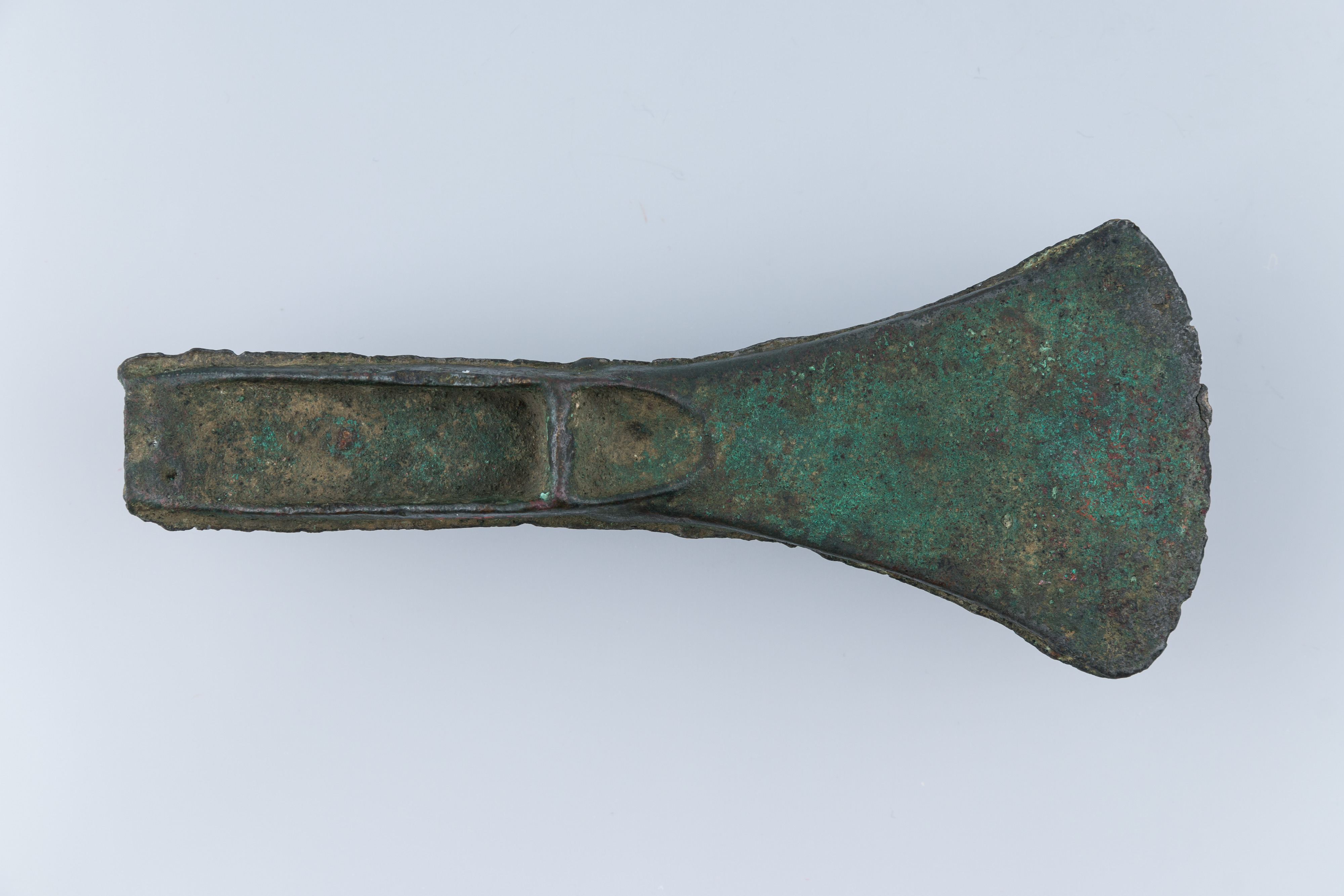
A palstave is a type of bronze axehead particularly associated with the Middle Bronze Age. Amgueddfa Cymru’s guide illustrates examples dating from about 1500 to 1275 BC, although the type continued in later forms. That gives a sense of the technology’s age, rather than a precise date for our local hoard.[2]
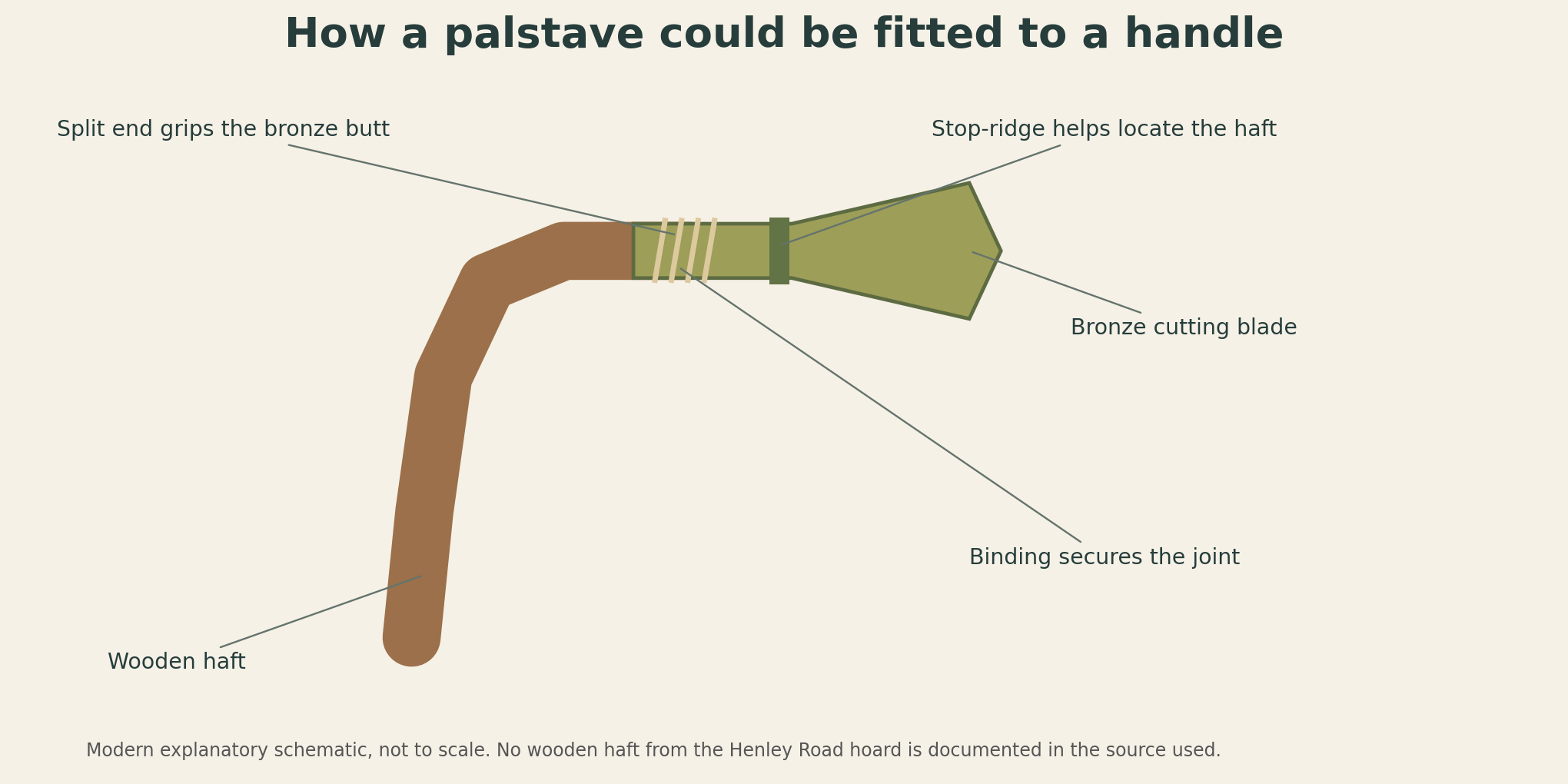
These were carefully designed tools. Raised edges and a transverse stop helped secure the bronze head to a forked wooden handle. Some examples also had a side-loop for binding. Bronze, an alloy of copper and tin, could be cast into moulds and worked into useful cutting edges.[2][3]
Axes made the cutting and shaping of timber possible for fuel, buildings and other tools. An axehead was therefore a useful possession, as well as a quantity of potentially reusable metal.[4]
Why bury nineteen?
That is the attractive mystery. Were these someone’s stock, valuables hidden for later recovery, or bronze collected for future reuse? Could their burial have had a ceremonial purpose? Such explanations occur in discussions of Bronze Age hoards, but they need testing against each discovery’s evidence.[4][5]
The much larger Havering Hoard, for example, contained many broken objects which London Museum suggests may have been intended for melting down. That does not establish what happened at Henley Road. We would need the original records and a closer look at the nineteen objects before choosing an explanation.[4]
Nor does finding axeheads here prove that they were made here. Objects could travel; the place where a hoard was deposited need not be the place where its metal was cast.
Even with that caution, it is a pleasing coincidence: a collection of Bronze Age metalwork beneath an area now known for industry. Three thousand years of continuous manufacturing would be quite a claim. Nineteen axeheads and an unanswered question are a good enough story to begin with.
Do you remember an account of the discovery, an old photograph, or a local-history film showing the axeheads in a museum collection? Please share what you know with Cippenham.org. There may be another chapter waiting in somebody’s files.
Sources
- Stantec, Slough Trading Estate New SPZ Scheme: Written Scheme of Investigation, June 2024, §2.3.13, printed p. 9. Council PDF. This is a modern summary of the HER, not the original discovery account.
- Amgueddfa Cymru, Identifying Bronze Age Axes. Illustrated guide.
- Reading Museum, Bronze Age Archaeology, PH 4/B, p. 4. Learning resource.
- London Museum, The Havering Hoard. Museum article. A comparison, not evidence about the condition of the Henley Road objects.
- British Museum, Money, Room 68 large-print guide, case 5. Gallery guide. Examples of valuables, axes and possible offerings; these are different finds.
- Ordnance Survey, 1:25,000 mapping, National Library of Scotland, OS 1:25,000, 1937–61 layer, Burnham Station and Haymill vicinity. Annotation: “Bronze Hoard found AD 1926”. The series date range is not the individual sheet’s publication date. Map viewer.